Diwali falls on Sunday, November 8, 2026, with Dhanteras two days earlier on Friday, November 6, so gift lists are being finalised right now. Diwali is also one of the most generous seasons of the year, and one of the most wasteful. Plastic-wrapped hampers, glitter packaging and mass-produced decorations often end up in the bin within weeks.
The good news is that a sustainable Diwali does not mean a less joyful one. The best eco-friendly gifts are thoughtful, useful and made to last, and many carry more meaning than a box of something forgettable. This guide covers 25 ideas across décor, food, home, wellness and more, plus tips on wrapping and avoiding greenwashing.
How to Choose a Truly Eco-Friendly Gift
Before you shop, a few simple principles make every choice easier.
- Choose useful or consumable: A gift people will actually use or finish beats one that gathers dust.
- Look at materials: Natural, recycled, reclaimed and organic materials usually have a lower footprint than virgin plastic or synthetic blends. Where you can, look for recognised labels such as GOTS for organic textiles, FSC for wood and paper, or Fairtrade for food.
- Check the packaging: A great product wrapped in plastic and foam undermines the point. Choose minimal, paper-based or reusable packaging.
- Support small makers: Artisans, local producers and independent shops often use traditional techniques and keep money in the community.
- Be wary of vague claims: If a brand says “eco-friendly” but gives no detail, treat it with caution.
Festive Décor and Light
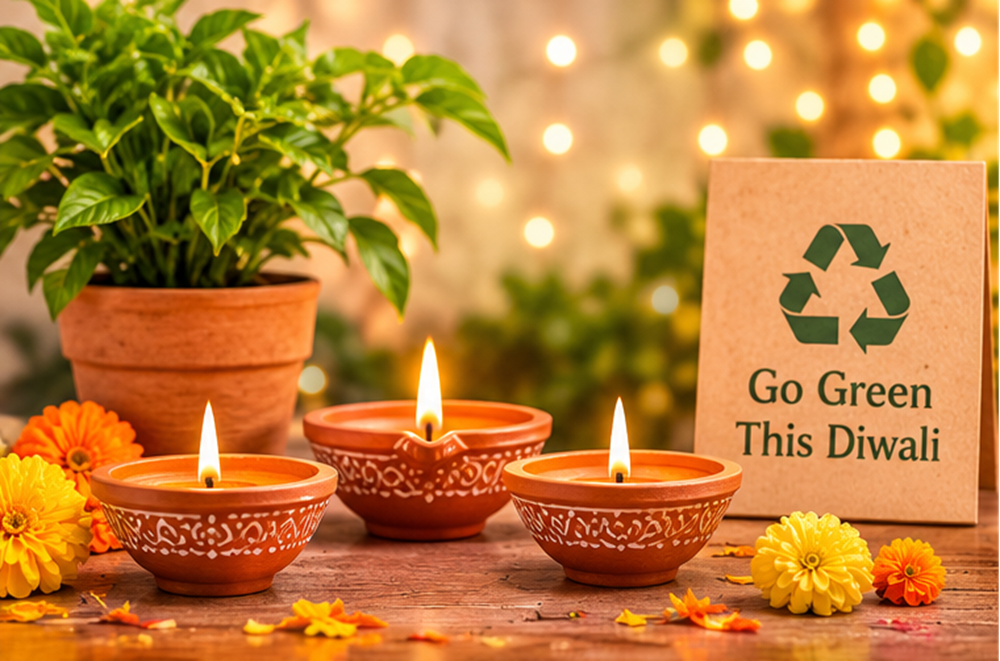
1. Brass or terracotta diyas: Reusable brass diyas can light your home for decades, while unglazed terracotta ones return safely to the soil. Both beat wax-filled plastic or metal tealight cups, and they make a classic present for hosts.
2. Soy or beeswax candles: Choose candles with cotton wicks in refillable glass or tin containers, and avoid paraffin, which comes from petroleum. Hand-poured festive scents such as sandalwood, rose or cinnamon feel special.
3. Natural rangoli kit: Skip synthetic coloured powders and bundle rice flour, dried flower petals and plant-based pigments with a reusable wooden stencil. It is a lovely gift for families with children.
4. Fabric torans and wall hangings: A hand-stitched or block-printed cotton toran can be hung every Diwali for years, unlike plastic marigold garlands that fall apart after a single season.
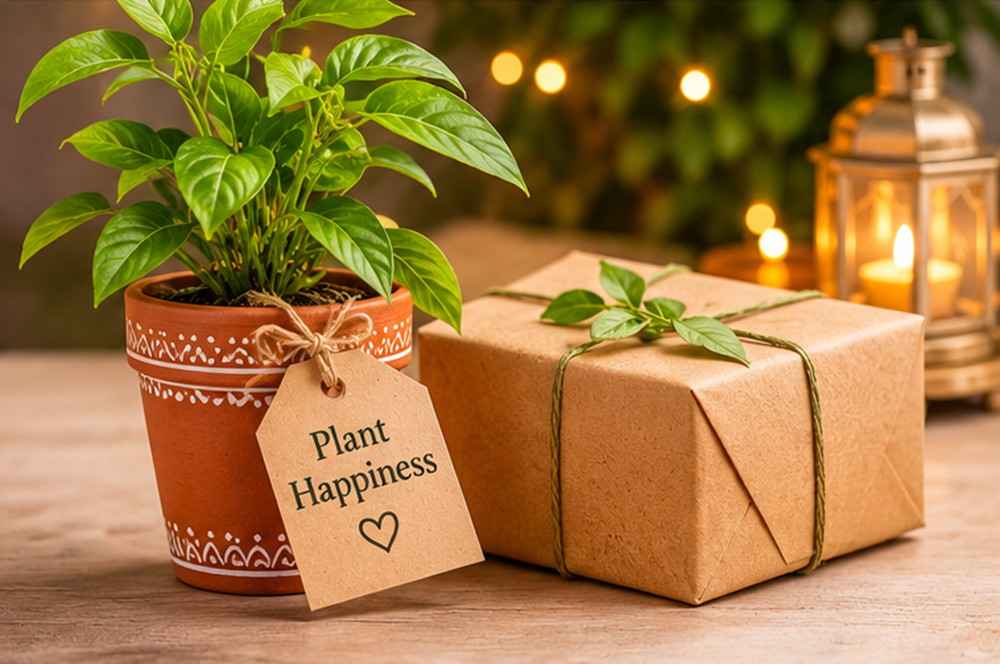
5. Potted plants in terracotta: Tulsi, jade, money plants and small herbs are popular gifts, and a living plant keeps giving long after the festival ends. Choose peat-free compost where possible and a plain terracotta pot.
Food and Treats
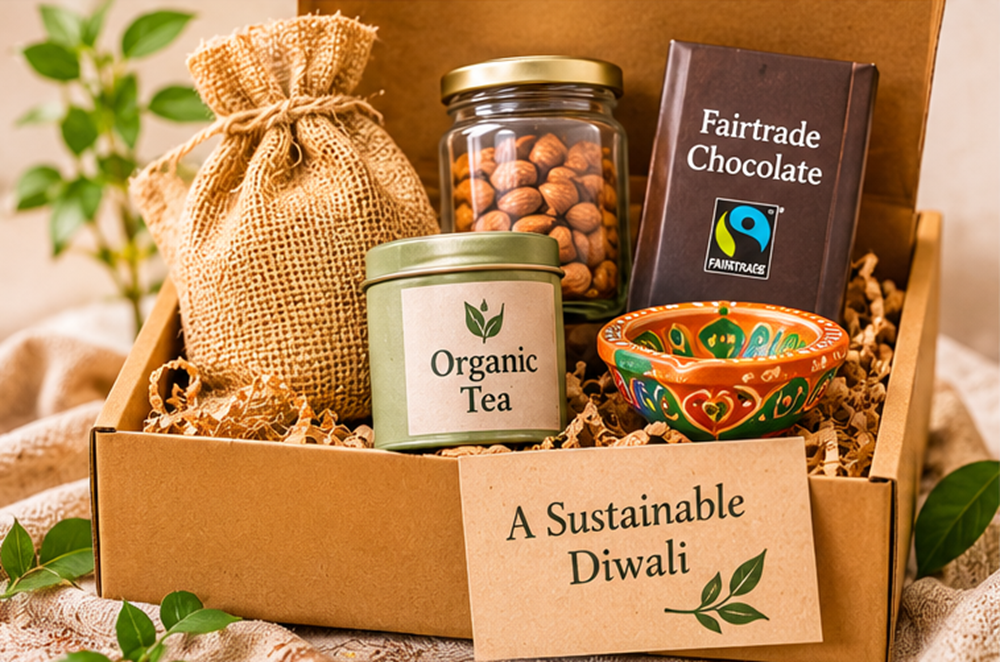
6. Organic dry fruit and nut box: Almonds, cashews, figs and dates are a Diwali staple. Pick organic or responsibly sourced options packed in a reusable tin, wooden box or jute pouch instead of plastic trays.
7. Locally made sweets in a reusable tin: Ask your local confectioner to fill your own tin or box, or choose a maker who uses compostable paper packaging. You get fresher mithai, less packaging and a better story.
8. Fairtrade chocolate: Look for the Fairtrade mark or a similar certification, and choose bars in paper or card wrapping rather than plastic. Dark chocolate with spices such as cardamom suits the season.
9. Loose-leaf tea or spice sampler: A chai blend or whole-spice set in small tins is a gift that gets used and enjoyed. The tins can be refilled, which cuts down on single-use sachets.
10. Local honey or jaggery: Raw honey and traditional jaggery from small producers usually come in glass jars that can be reused. Check the label for the origin so you know where it was made.
Home and Kitchen
11. Stainless steel or copper bottle: A durable bottle replaces hundreds of single-use plastic ones. Stainless steel is the easiest to care for, while copper suits those who like the traditional style, but follow the maker’s cleaning guidance.
12. Bamboo or wooden serving set: Trays, bowls and serving spoons made from responsibly sourced bamboo or wood are ideal for festive entertaining. Look for FSC certification on wood products.
13. Beeswax wraps: These reusable food wraps replace cling film for covering leftovers, which suits a festival full of shared dishes. Vegan versions use plant-based waxes.
14. Block-printed table linen: Cotton napkins and table runners printed by hand are practical, beautiful and washable. They cut down on paper napkin waste at every meal.
15. Herb-growing kit: A small kit with seeds, a pot and a growing guide suits anyone who cooks. Choose kits with compostable or paper packaging and untreated seeds.
Personal Care and Wellness
16. Handmade soap set: Small-batch natural soaps wrapped in paper make a gentle, affordable gift. Look for palm-oil-free or sustainably sourced palm oil, and a clear ingredient list.
17. Shampoo and conditioner bars: Solid bars last longer than liquid bottles and come without plastic. They travel well, which makes them handy for relatives who are visiting.
18. Plant-based skincare in refillable packaging: Look for glass jars, aluminium tubes or refill options, plus transparent ingredient lists. Patch-test advice is worth including for sensitive skin.
19. Bamboo toothbrush set: A kit with a bamboo brush, toothpaste tablets in a tin and plastic-free floss is a small but practical present, perfect for gift baskets.
20. Organic cotton towels: Soft, long-lasting towels with GOTS certification are used every day, and they suit new homes and housewarmings.
Fashion, Stationery and Meaningful Extras
21. Handloom stole or scarf: Woven by artisans in natural fibres such as cotton, wool or silk, handloom pieces support traditional crafts and last for years. Ask about the maker and the dyes used.
22. Block-printed tote bag: A sturdy cotton or jute tote replaces dozens of plastic bags every year. Hand-printed designs make it feel like a real gift rather than an afterthought.
23. Recycled-metal or upcycled jewellery: Pieces made from recycled silver, brass or reclaimed materials are beautiful and lower in impact than newly mined metal. Choose makers who share where their materials come from.
24. Recycled paper journal with a plantable pencil: Pair a notebook made from recycled paper with a pencil that grows into herbs or flowers when planted. It is a small, affordable gift for colleagues and students.
25. A donation in their name: For the person who has everything, a charitable donation or tree-planting gift is a meaningful choice. Pick a registered charity and include a note explaining what the gift will do.
Sustainable Gift Wrapping Ideas
Packaging is where many eco-friendly gifts lose their shine. A few easy swaps help:
- Wrap gifts in fabric, such as a spare dupatta, scarf or cotton cloth, using the Japanese furoshiki folding method. The wrap becomes part of the gift.
- Use plain brown kraft paper decorated with dried flowers, twine or hand-drawn designs.
- Avoid glitter, foil and plastic ribbon, which are generally hard to recycle.
- Present gifts in reusable tins, jute bags or baskets the recipient can keep.
- Reuse gift bags and boxes you have received, and encourage friends to do the same.
How to Avoid Greenwashing When Gift Shopping
Festive marketing is full of green-sounding words. Vague terms like “natural,” “eco” and “green” have no fixed meaning, so look for specifics: what the product is made of, where it was made and by whom. Certifications such as GOTS, FSC and Fairtrade are more reliable than a leaf logo a brand designed itself. For a deeper checklist, read our guide on how to identify sustainable brands.
Final Thoughts
A sustainable Diwali is not about spending more or giving less. It is about choosing gifts that are meaningful, useful and made with care for people and the planet. Whether you pick a brass diya, a box of local sweets or a plant for a friend’s balcony, the thought behind it matters most. Start with one or two swaps this year, and let the habit grow from there. Happy Diwali!
Looking for more ideas beyond the festival? Browse our eco-friendly gifts guide.